What Really Stops Me From Approaching Women I Am Attracted To?
Find Out in 60 Seconds With This Free Illustration
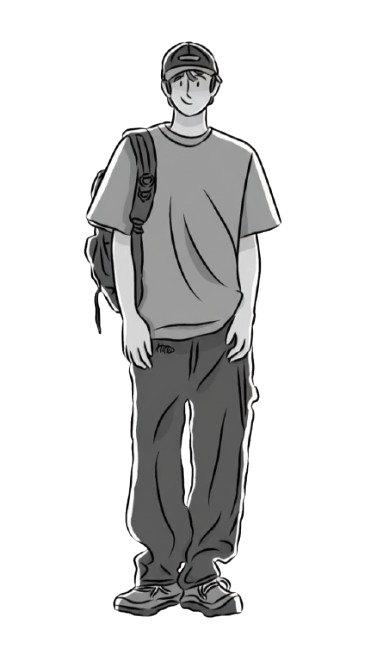
This is Steve
He is 22, not too good-looking and not too bad either, just an average guy. Most people would rate him about a 7 or 8/10.
He has had a crush on this girl, Emma
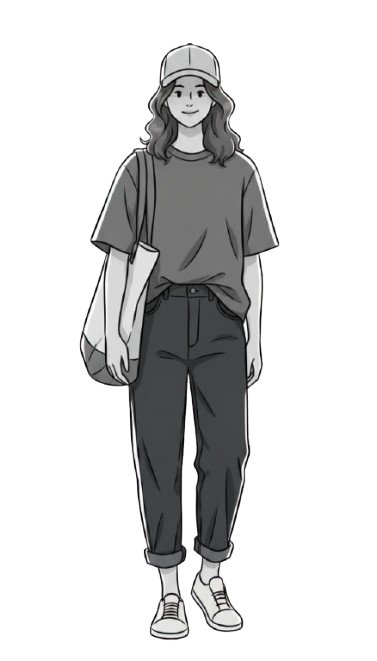
Emma works a few blocks from where he stays.
Steve sees Emma heading to work every morning and coming back in the evening, wanting to approach her.
Whenever he sees her in the morning, he tells himself he’ll do it in the evening. Then, when he sees her in the evening, his heart skips a beat. He gets nervous, his hands get a little shaky, he sweats, and he just lets her pass,telling himself he’ll do it in the morning.
This cycle repeats itself over and over again.
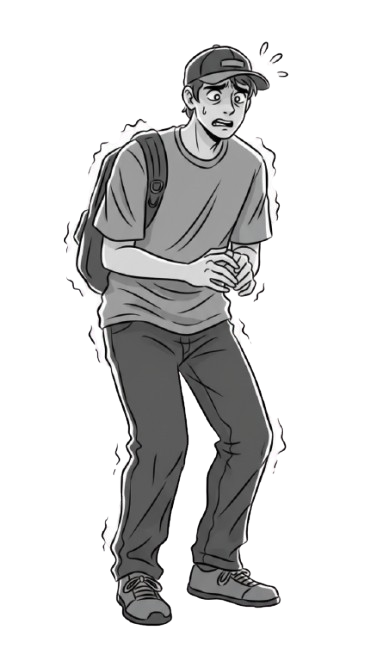
Now, what’s actually wrong with Steve? Why does something that seems so simple—something that would probably take a minute or two stress him out so much and make him procrastinate day after day?
What’s actually going on in Steve’s head:
First, the plan when Emma isn’t there:
Earlier in the morning, steve saw Emma and decided he would approach her the next time he sees her. In that moment, he truly believes he will do it.
This is because when Emma isn’t around, the part of steve’s brain associated with planning and decision-making (the prefrontal cortex) is in charge, and it logically assesses the pros and cons and makes a strategic decision, like:
When Emma is there:
It’s evening now. steve is fully prepared to meet Emma. He has a few lines in his head and has motivated himself with some things he read online. He is a bit nervous, but it’s nothing he can’t handle.
But the moment he sees Emma, the threat-detection part of the brain (the amygdala) takes over. This part of the brain isn’t concerned with long-term goals; it assesses immediate threats. And right now, it sees Emma as a high-stakes social threat.
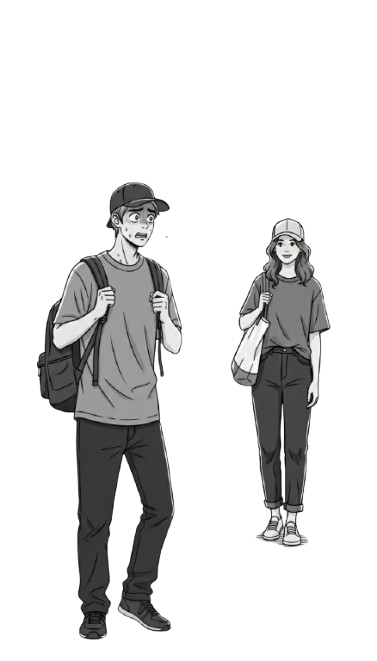
The amygdala hates uncertainty. It senses that her reaction is unknown and interprets the possibility of rejection by a desirable mate as a potential loss of social status. So It pushes the brain into a high-pressure performance mode, where every word and action must be perfect to avoid “social damage” To protect him, and it actively generates excuses and rationalizations as a self-protective narrative to justify retreat.
Excuses on;
And that’s why something that seems simple can feel impossible. steve isn’t weak or unmotivated—it’s just his brain doing exactly what it was designed to do: protect him from social threat.
You might be thinking, “But I know people who do this effortlessly. Don't their brain work in the same way?”
You’re right to wonder that. But the truth is: everyone’s brain reacts the same way when social stakes are high. The difference is in the training the brain has received to handle the response instead of letting it take over.
At the first approach, your internal alarm system screams “DANGER!” It can’t tell the difference between social risk and a physical threat.
The Result: The world does not end. She doesn’t scream. You aren’t humiliated. Maybe she smiles, maybe she says she has a boyfriend, maybe it’s awkward, but you survive.
The Lesson for the Amygdala: Hmm… the 'threat' I detected did not lead to social death or physical danger, and over time it learns and gets used to it.
But knowing why your brain reacts this way doesn’t solve the problem. Understanding it doesn’t magically make hesitation disappear. Even when I first learned why approaching felt so difficult, I still froze on my next attempt.
That’s why I created this book.

It’s the guide I wish I had when I first started interacting with women.
Approaching is the foundation because it’s where most men break first. But the book doesn’t stop there. It walks you through the entire dating dynamic:
And the best part? When you get the book, you also gain access to an exclusive Discord community.
This is where you can share your experiences, ask questions, and get advice from men who have faced the same challenges. You’ll see firsthand how others push past hesitation, handle rejection, and start attracting women naturally. Being part of this community makes it easier to apply what you learn, stay accountable, and avoid mistakes most men only realize after years of trial and error.
(Start Reading Instantly)